
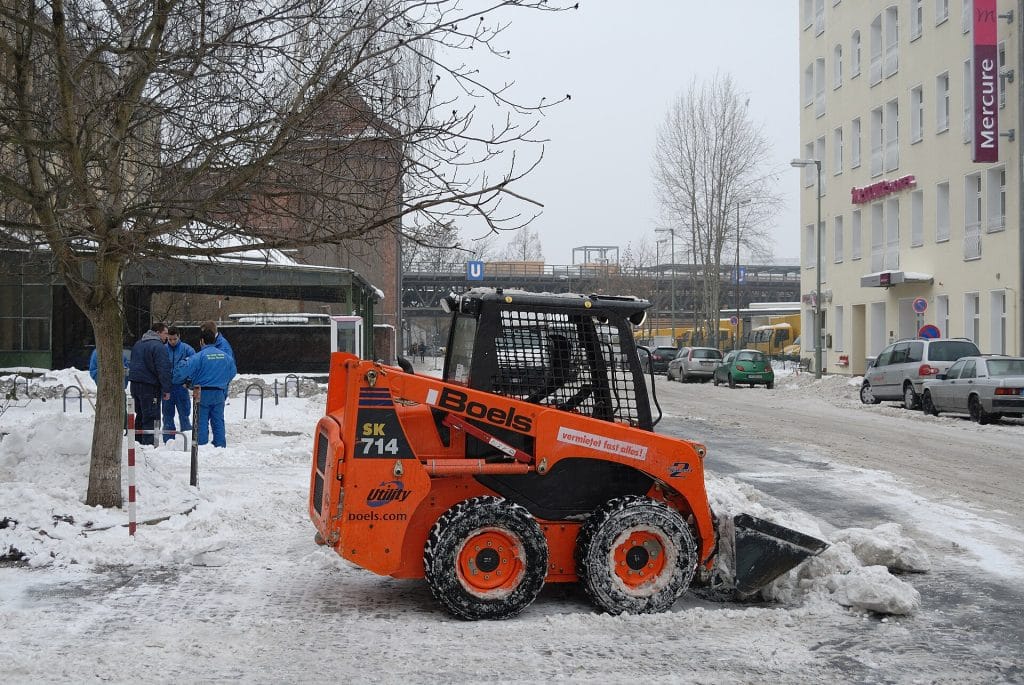
When it’s cold outside, the overhead doors stay shut. Skid-steers clean out barns and shops, forklifts keep the warehouse moving, and portable heaters keep the space warm. Every one of those engines and burners makes carbon monoxide (CO). With the doors closed, it has nowhere to go.
This is general information, not legal advice.
Why carbon monoxide is easy to miss
CO comes from fuel that doesn’t burn completely, such as gasoline, propane, natural gas, kerosene and oil. The Canadian Centre for Occupational Health and Safety (CCOHS) calls it a gas you can’t see, smell, taste or touch. It can also cause confusion, so you may not realize you’re in trouble until it’s too late.
Winter makes it worse. Doors and windows stay closed, less fresh air comes in, and it’s tempting to let machines idle inside to warm up.
Common indoor sources in winter
- Skid-steers and compact loaders working in barns, arenas, shops and parkades
- Propane or gas forklifts in warehouses
- Trucks and equipment idling in a shop to warm up
- Portable propane or kerosene heaters
- Gas-powered saws, pumps, generators and pressure washers
Exhaust from outside can get in too. WorkSafeBC notes that workers indoors can be exposed when vehicles idle next to a building’s fresh air intakes.
Know the warning signs
According to Health Canada, low levels of CO can cause:
- Tiredness
- Headaches
- Flu-like symptoms
- Shortness of breath
- Muscle weakness
Higher levels can cause dizziness, chest pain, poor vision and trouble thinking. Very high levels can cause loss of consciousness, convulsions, coma and death.
These symptoms are easy to mistake for the flu. Here’s a clue: if several people in the same building feel sick and feel better once they step outside, think CO.
If you suspect CO, get out into fresh air right away and report it to your supervisor. If someone is unconscious or very ill, call 911. Tell your doctor you may have been exposed. Don’t go back in until the area has been checked and cleared under your employer’s procedures.
What the rules say
In Alberta, Schedule 1 of the Occupational Health and Safety Code sets an 8-hour occupational exposure limit for carbon monoxide of 25 ppm. Other provinces set their own limits. Your employer’s hazard assessment should list CO sources and the controls in place for them. Follow your employer’s procedures and the rules in your province.
How to keep CO under control
Start with the most effective controls and work down the list:
- Swap the equipment. Use electric or battery-powered machines and tools indoors where you can.
- Ventilate. Use exhaust fans and fresh air to move CO out of the work area. Opening a door a crack is not a ventilation plan.
- Shut it off. Limit how long fuel-powered machines run inside. Don’t idle indoors to warm up.
- Maintain it. Keep engines, heaters and exhaust systems in good repair.
- Detect it. Install CO detectors with audible and visual alarms, and test them.
- Train for it. Make sure workers know the sources, the symptoms and what to do in an emergency.
A quick check before you start an engine inside
- Is the ventilation running?
- Is the CO detector working?
- Does this job need an engine indoors, or can it be done outside or with electric equipment?
- Does someone know you’re working in there?
Add these questions to your pre-shift walk-around, and cover CO when you onboard your seasonal operators.
Running skid-steers this winter? Our Skid-Steer Loader Safety course covers the theory every operator needs, with a certificate and record for each person. You can try the first lesson free.